
Why Location-Based AI Depends on a Specialised Geospatial Annotation Company
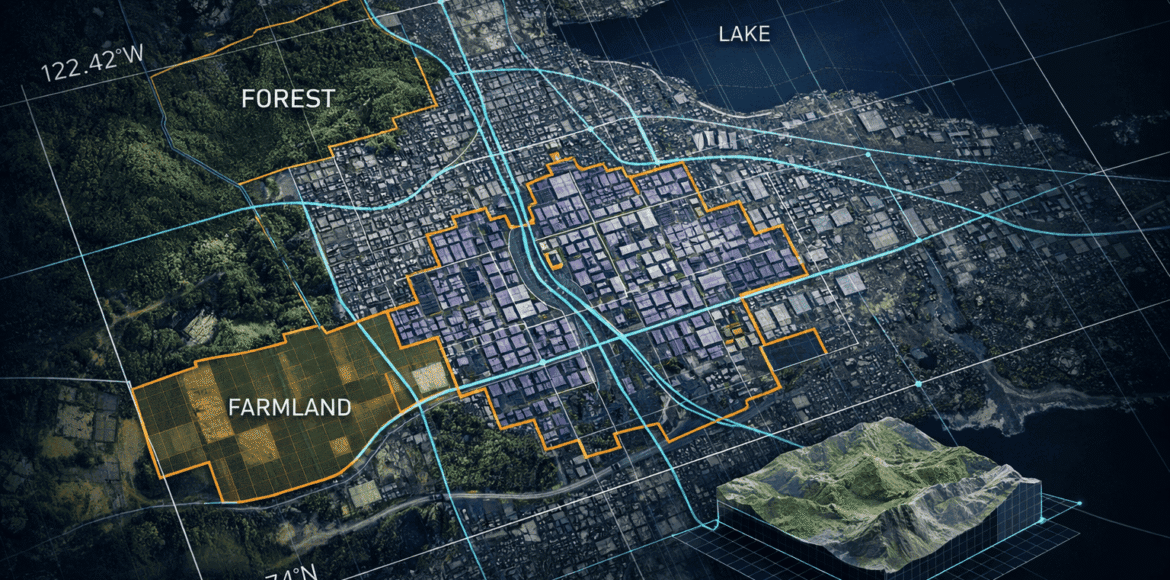
The application of location-based AI relies on a dedicated Geospatial Annotation Company. Precise spatial intelligence requires accurate, annotated geographic data that general annotation techniques cannot always provide.
Location-based AIs finds application in navigation applications, logistics software, smart cities, farm applications, and disaster response software. The apps are based on precise location information and spatial relationships. Simple mistakes in annotation may result in incorrect pathways, incorrect plans, or incorrect forecasts.
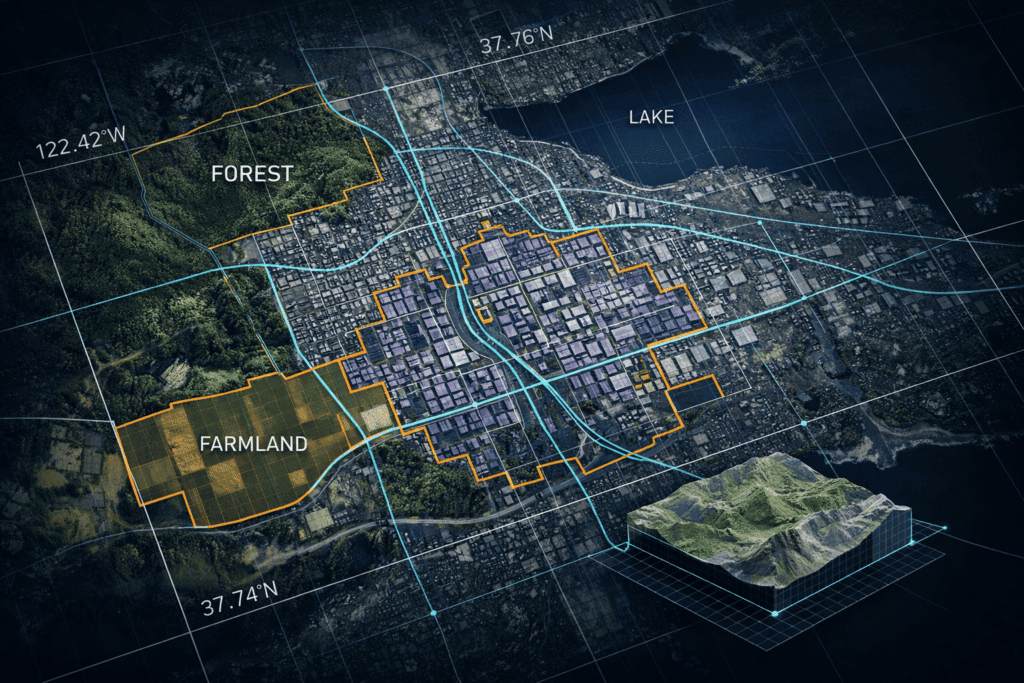
The reason why Location-Based AI Needs Specialised Annotation.
Location based AI works with complex data types such as satellite imagery, aerial photos, LiDAR scans and GIS layers.
This data requires:
- Accurate coordinates and boundaries.
- Proper alignment with real-world geography.
- Consistent labelling across broad geographic regions.
Unlike standard images, geospatial data represents real locations. If a road, building, or boundary is labelled incorrectly, the AI system learns the wrong spatial pattern. Specialised annotation ensures that every label matches the physical world.
The Geospatial Annotation and its role in enhancing AI Accuracy.
Geospatial annotation transforms unstructured geographic data into structured data that can be comprehended and analysed by AI models.
The AI systems can:
- Name roads, buildings, land cover and terrain features.
- Know distance, direction and spatial relationships.
- Deal with regional, climatic, and topographical diversities.
This enhances the accuracy of the models and also enables AI systems to work well in the real-world, not only in the controlled one.
Supporting Scale Without Losing Precision
The projects related to location-based AI tend to use enormous datasets, including a city, a region, or a country. A Geospatial Annotation Company assists a team:
- Label vast geographical locations effectively.
- Ensure uniformity of datasets.
- Apply standardized labeling rules at scale
This simplifies the scaling of AI systems from pilot projects to full-scale systems. In the absence of specialized assistance, scaling can produce unstable labels and worse model performance.
Reducing Risk in the Real World Applications
Errors in location based AI can have serious consequences. Poor annotation can result in:
- Wrong navigation routes.
- Poor location of land boundaries.
- Faulty infrastructure or planning insights
Geospatial high-quality annotation minimises such risks, as it provides spatial precision and alignment. This is crucial, particularly in the transport, defence, urban planning and infrastructure projects that require reliability.
Assistance to AI Teams in Core Development.
Internal management of geospatial data is time consuming and resource intensive. Under collaboration with a geospatial annotation company, AI teams can:
- Get rid of complicated and repetitive spatial labeling tasks.
- Emphasize on model development and optimization.
- Speed up the transition from prototype to production.
This will enable teams to innovate faster while maintaining high quality of data.
Conclusion
The process of creating accurate location intelligence begins with accurate information. An expert Geospatial Annotation Company offers the knowledge, consistency, and scalability to get location-based AI systems to train and perform effectively in the real world. It also makes AI systems deal with various sites, dynamic situations and geographic information confidently at a large scale.
FAQs
What is the difference between geospatial and regular image annotation?
Not just the visual labelling, but also includes proper coordinates, space, and geographical location. It makes sure that data is well matched to physical locations.
Which industries rely most on location-based AI?
It is applied in transport and logistics, smart cities, agriculture and environmental monitoring. Spatial data is essential to these sectors in order to make reliable and timely decisions.
Can automated tools fully replace geospatial annotation experts?
Automation contributes to accelerating the process of annotation and processing big data. Nonetheless, critical human inspection is necessary to provide accuracy and cope with edge cases, as well as to ensure the quality of data.