
How Image Tagging Services Help AI Teams Move from Prototype to Production
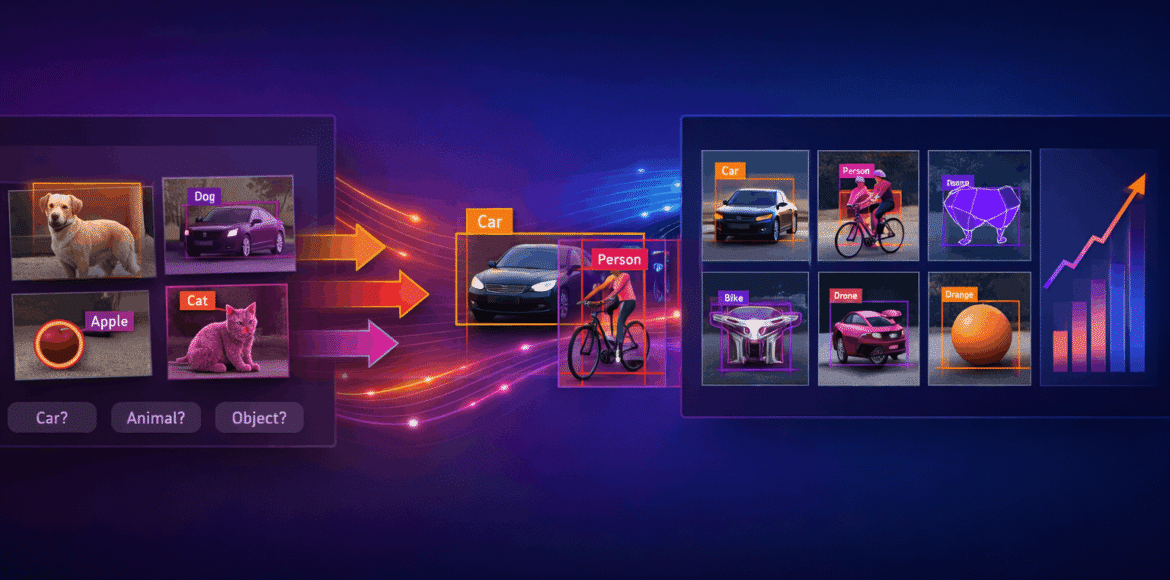
Image tagging services help AI teams move from prototype to production by turning messy image data into clean, labelled datasets that models can actually learn from.
Early AI prototypes often work in demos but fail in real-world use. The biggest reason is poor or incomplete training data. High-quality image labelling fixes that gap and makes models reliable at scale.
What Are Image Tagging Services?
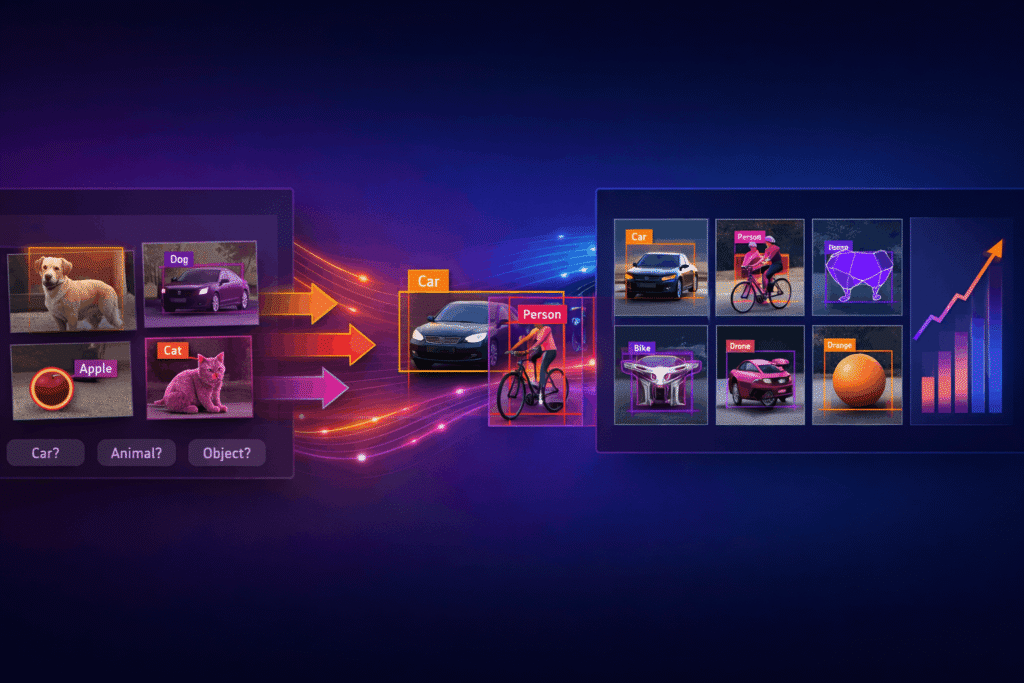
Image tagging services are mechanisms or systems that automatically or manually assign descriptive keywords (tags) to images. The tags may describe objects, scenes, colours, text or context in a photograph. Such labels get converted to metadata that computers can process and train computer vision models to recognise objects or classify images.
Why Image Tagging Matters for AI
The vast majority of AI systems that perceive the world (such as object detection, quality control, content moderation, or asset search) require thousands – and even millions – of labelled images to perform effectively. Without accurate tags:
- Models learn the wrong thing or become confused.
- Performance drops when moved from test environments to real use.
- The time spent on training is more due to the fact that the data requires additional cleaning.
That is why good image tagging is a foundational step.
How Image Tagging Improves Model Accuracy and Stability
Image tagging creates clear connections between visual data and real-world meaning. This is what allows models to generalise.
Under Image Tagging Services, AI teams receive:
- Uniform labels of thousands or millions of images.
- Domain tagging (medical, retail, security, etc.).
- Reduce noise in training data.
This directly improves:
- Precision and recall
- Model confidence scores
- Performance on unseen pictures.
- Fast Track Training on Quality Datasets.
AI teams waste a significant amount of time on collecting and tagging data. Image Tagging Services make that work automatic or scalable:
- AI image tagging is much faster than manual tagging. It is able to process thousands of images simultaneously.
- Automated tagging tools offer consistent accuracy that cannot be maintained by human taggers in large-scale tagging.
This speedy labelling assists teams in training models faster and testing prototypes faster.
- Accelerating the Process of Experiment to Deployment.
Handwritten in-house labelling is a time-consuming activity. It also takes the engineers out of core work. Image Tagging Services are useful in assisting teams to:
- Scale labelling fast without hiring internally.
- Deliver on time product requirements.
- Iterate models more often.
Rather than waiting weeks to run data preparation, teams keep training models. Rapid feedback results in rapid production readiness.
- Eliminating Risk, Bias and Compliance Problems.
The AI systems used in production should be fair and compliant. Poor labels enhance legal and ethical risks.
Professional tagging assists in:
- Using consistent rules on datasets.
- Supporting bias audits and corrections
- Developing traceable labelling processes.
This is particularly relevant in healthcare, finance, and surveillance application areas where errors are expensive.
- Helping AI Teams Focus on What Matters Most
AI engineers are not supposed to label images all day long, but create models.
Outsourced tagging:
- Save engineers time
- Enhances model iteration speed.
- Reduces operation costs.
When labelling is done in the right way, the teams will focus more on refining the algorithms and less on correcting data issues.
Conclusion
Moving from prototype to production, it requires reliable data. Image Tagging Services offers the accuracy of image labelling, scale, and consistency that AI teams require to roll out models that perform reliably in the real world.
FAQs
- Are Image tagging services only useful for large AI teams?
No. Small teams even have the advantage of saving time and preventing early errors in data.
- Can tagged images be reused for future models?
Yes. High-quality labels create reusable datasets for retraining and scaling.
- Do image tagging services support custom industries?
Most providers offers domain specific tagging tailored to industry needs.